
Why Johannesburg's Most Discerning Are Choosing Permanence Over Trend
Most fashion depreciates the moment you wear it. A pair of sneakers loses value the day it leaves the box. A seasonal coat becomes last year's story by spring. A trend-driven bag becomes a reminder of a moment that has already passed.
A small number of houses have built their reputation on the opposite promise. In Johannesburg, a growing number of collectors have started treating a handful of bags less like accessories and more like assets - and the resale data increasingly backs them up.
From Status Symbol to Store of Value
There was a time when a luxury bag was purely a signifier of taste. You carried it to be seen. Its value was social - a declaration of access, of belonging to a particular world. That dimension hasn't disappeared, but something else has been layered onto it.
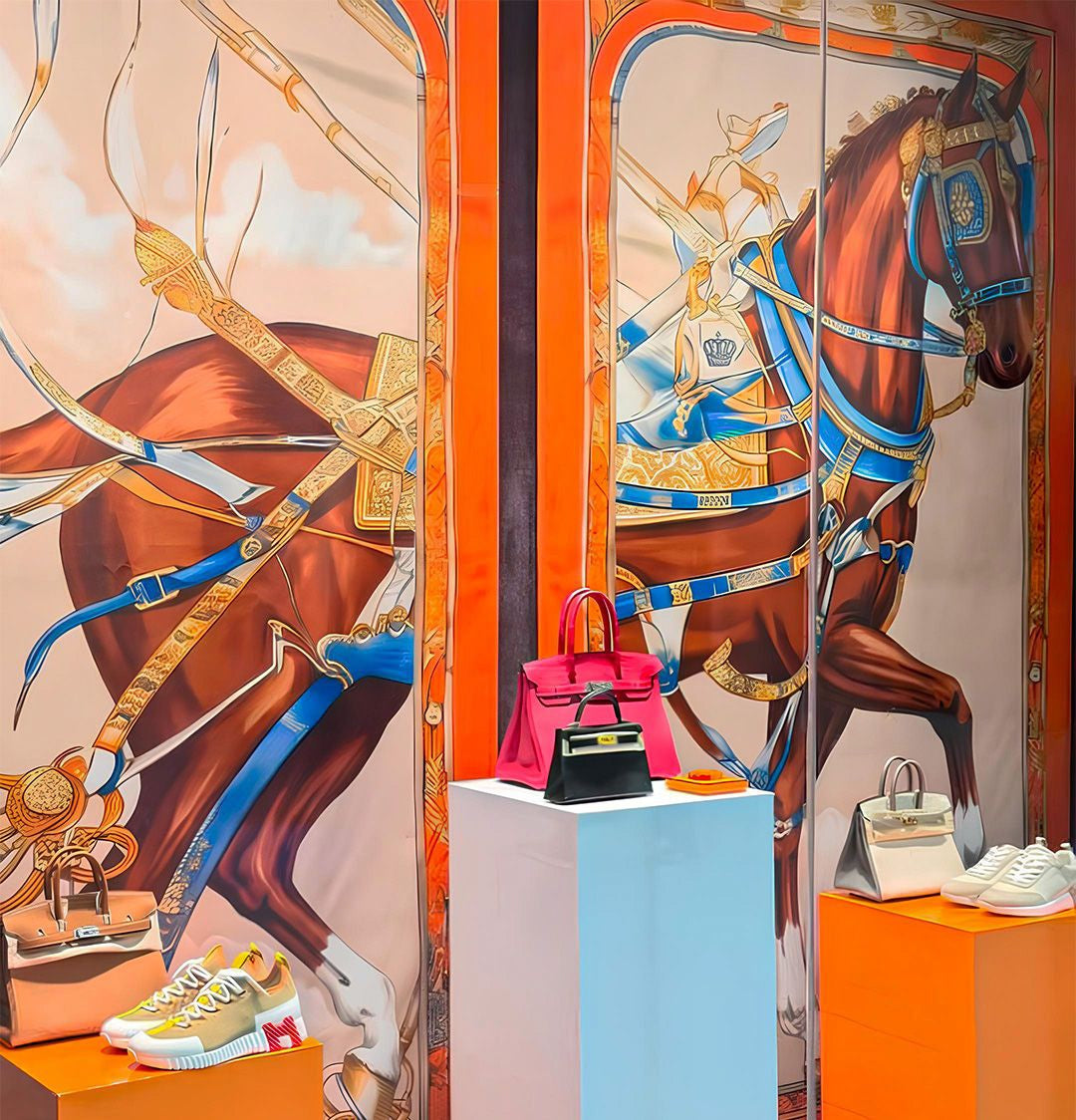
Hermès remains the clearest example. The Birkin has averaged an annual increase in value of roughly 14% over the past decade, a figure CNBC has reported outperforms the S&P 500 across the same stretch. Jane Birkin's original 1984 prototype went further still, selling at auction in Paris in July 2025 for $10 million.
A watch depreciates. A car depreciates. A growing category of handbags, increasingly, does not.
What the Numbers Actually Say
Rebag's 2025 Clair Report, the most comprehensive annual study of the pre-owned luxury market, tracks value retention across the industry. Hermès led the field again this year at an average of 138% retention, with individual styles such as the Kelly Mini II trading at around 282% of original retail and the Birkin Sellier at roughly 183%.
Goyard sits close behind, with an overall average around 132% and standout styles like the Roulette Bag and Saint Louis Tote trading well above retail. Telfar, a brand with a very different origin story, has climbed to nearly 130% retention of its own - proof that cult demand can build the same kind of value as heritage scarcity. Loewe's Puzzle bag has posted retention in the double digits above retail, and Prada's archival Re-Edition 2000 Hobo has traded at around 109%, part of a broader climb in the house's resale performance over the past two years.
None of these are projections. They're recorded transaction data from one of the largest resale platforms in the world, and together they point to the same conclusion: a specific kind of handbag - well made, deliberately produced, designed without an expiry date - is trading more like an asset class than an accessory.
Different Paths, Same Destination
What's notable is that these houses arrive at their value through entirely different instincts.
Hermès is deliberately inaccessible. Acquiring a Birkin - what collectors call the Hermès Game - is intentionally opaque, with limited seasonal allocations and preference given to clients with an established history at the house. Goyard moves differently again: no advertising, no social media, no celebrity campaigns, just a coated canvas and a hand-painted chevron pattern doing all the talking.
Telfar earns its premium from the opposite direction entirely - not exclusivity by design, but demand that has simply outpaced supply, turning its restock drops into some of the most anticipated moments in fashion. Loewe leans on design distinctiveness that photographs and resells well independent of trend cycles, while Prada has found that its own archive, reissued at the right moment, can perform as strongly as anything new.
Scarcity, silence, grassroots demand, design, archive - the mechanisms differ, but the outcome is the same. Each has built enough restraint or enough conviction into how it operates that the secondary market rewards it.
What It Signals in Johannesburg
In Sandton, the language of luxury has matured past logo-saturation into something more considered. The buyers we see at Soul Gallery are less interested in the loudest bag in the room and more interested in the one that communicates permanence.
Carrying one of these bags in Sandton says something a trend-driven seasonal piece can't: that the person carrying it understands value in the long term. Not what's fashionable this season, but what will still be relevant, and still be worth something, in ten years. J.P. Morgan's global research has flagged a similar pattern internationally: high-net-worth individuals moving away from ostentatious branding toward quieter, more enduring markers of quality. Johannesburg's top tier has been tracking that shift in real time.
The Soul Gallery Perspective
At Soul Gallery, we think about luxury bags the way a considered collector thinks about any asset: controlled production, materials that age rather than deteriorate, and a house with the conviction not to dilute what makes it desirable. Hermès and Goyard remain the clearest examples of that discipline, and we carry both alongside Loewe, Prada, and Telfar - three very different houses proving the same principle in their own way.
Buying one exceptional bag and holding onto it isn't a conservative choice - it's a precise one. The alternative, cycling through seasonal purchases that lose value the moment they leave the store, tends to be the far more expensive habit.
The bag that costs the most upfront is rarely the one that costs the most over time. It simply becomes more valuable while you're not looking.
Available in-store at Sandton City and online at soulgallery.co.za